Choosing between pills and a procedure can feel overwhelming when time, privacy, and safety all matter at once. If you are comparing medical versus surgical abortion, the right option depends on how many weeks pregnant you are, your medical history, how quickly you want the process completed, and what feels most manageable for you emotionally and physically.
This is not a decision that should come with pressure or judgement. Some women want the privacy of completing treatment at home in the early weeks. Others want a faster, doctor-led procedure in a clinical setting so the pregnancy is ended in one visit. Both options can be safe and effective when provided under proper medical guidance.
Medical versus surgical abortion at a glance
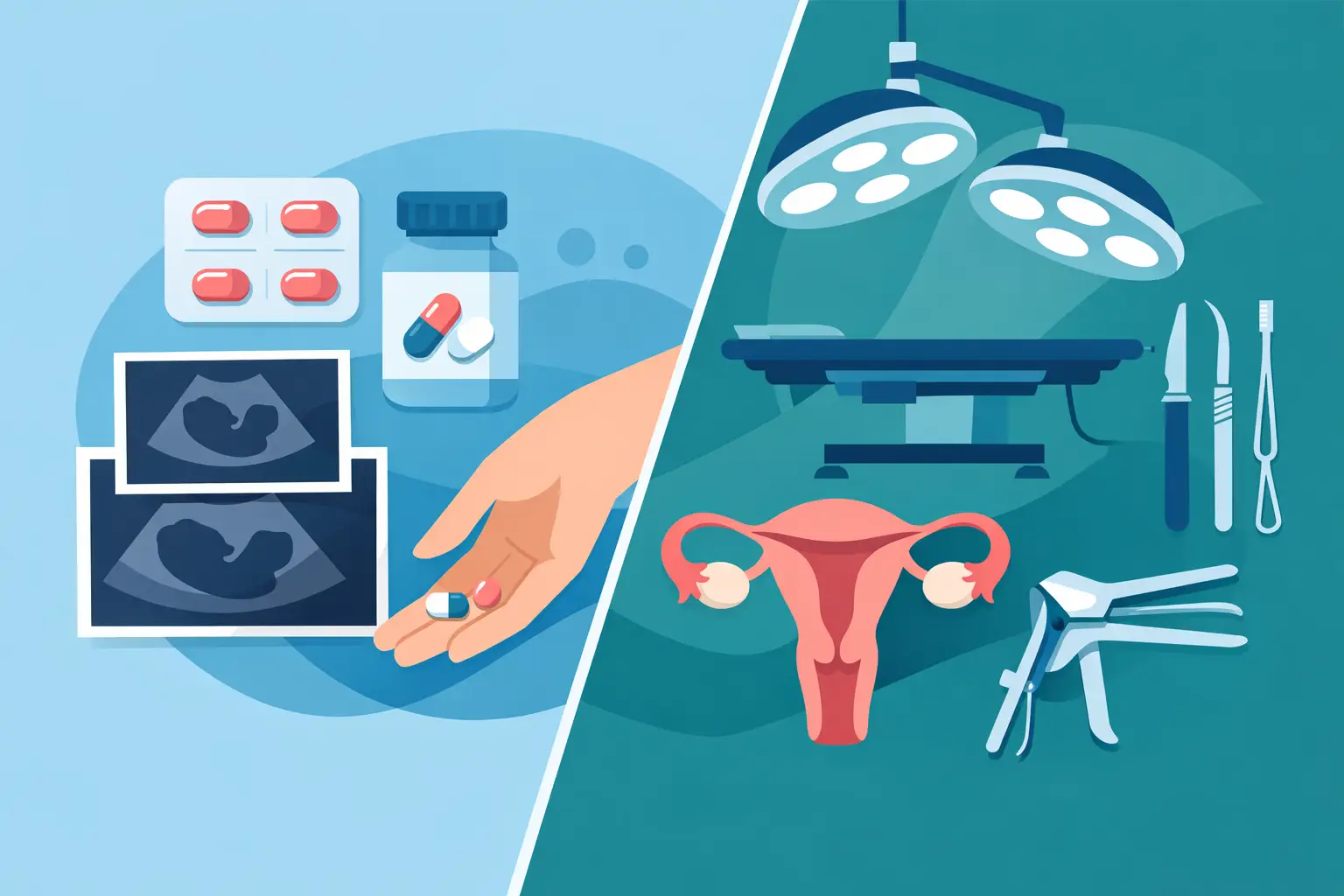
A medical abortion uses prescribed medication to end an early pregnancy. It is usually chosen in the first weeks of pregnancy and involves bleeding and cramping as the body passes the pregnancy tissue. For many women, this feels more private because it can happen at home, but it also means the process can take hours or sometimes longer to fully complete.
A surgical abortion is a procedure carried out in a clinic by an experienced doctor. It is generally quicker and more predictable, and it can be used later in pregnancy than abortion pills. Many women choose this route because they want the process finished under direct medical supervision.
The main difference is not simply pills versus procedure. It is also about timing, control, privacy, speed, and how much uncertainty you are comfortable with.
When medical abortion may be suitable
Medical abortion is most often used in early pregnancy. If you have recently missed your period or have only been pregnant for a short time, this option may be appropriate after an assessment. A doctor will usually confirm the gestational age and check whether there are any reasons why pills may not be the safest route for you.
The process typically involves medication that causes the pregnancy to stop developing and then medication that helps the uterus empty. Cramping and bleeding are expected. For some women, it feels similar to a very heavy period. For others, it can be more intense, especially for a few hours during the main part of the process.
One reason many women ask for abortion pills is privacy. Being able to remain in a familiar place can feel more discreet and emotionally easier. That said, home-based treatment also means you need to be prepared for bleeding, pain relief, rest, and follow-up. If you are in a situation where you cannot safely recover in private, a procedure may feel more secure.
Benefits of medical abortion
For early pregnancy, medical abortion can be highly effective and avoids instruments or surgery. It may feel more natural to some women because the body passes the pregnancy tissue itself. It can also offer a greater sense of personal control over where the process happens.
For women who are anxious about procedures, anaesthesia, or being in a clinic, this route may feel less intimidating. It can also be arranged quickly in some cases, which matters when you want prompt and confidential care.
Limits and trade-offs
Medical abortion is not always the best choice simply because it is less invasive. The bleeding and cramping can be emotionally difficult, especially if you were hoping for the quickest possible ending. There is also a small chance of incomplete abortion, which means further treatment or a procedure may still be needed.
It also takes more patience. Even when the medication works as expected, the experience is less predictable than a clinic procedure. If certainty and speed are your top priorities, that may influence your decision.
When surgical abortion may be suitable
Surgical abortion is usually recommended when the pregnancy is further along, when medication is not suitable, or when a woman wants the process completed in a controlled clinical setting. The exact type of procedure depends on how many weeks pregnant you are.
For many patients, the main appeal is certainty. The procedure is performed by a trained doctor, and it is generally completed within a short period of time. Instead of waiting for medication to work over several hours or days, you have a planned appointment and direct medical supervision throughout.
This can be especially reassuring if you have had a previous incomplete miscarriage or abortion, if heavy bleeding would be difficult to manage at home, or if you simply want the process over as quickly as possible.
Benefits of surgical abortion
Surgical abortion is very effective and often more predictable than pills. Bleeding afterwards is usually lighter than with medical abortion, although this can vary. Because the pregnancy is removed during the procedure, many women feel immediate emotional relief from knowing the process has been completed.
It is also the option that allows treatment later in pregnancy, which matters if you discovered the pregnancy late or had delays in seeking care. In a specialist clinic, you can also receive close monitoring, pain management, and aftercare advice in one setting.
Limits and trade-offs
A procedure can feel more daunting because it takes place in a clinic and involves direct intervention. Some women are more comfortable with that; others are not. There may also be more anxiety beforehand, particularly if privacy is a major concern or if you are frightened about being examined.
Recovery is often straightforward, but it still requires rest and follow-up. As with any medical procedure, it should only be carried out by qualified professionals in a safe and legal setting.
How pain, bleeding, and recovery differ
This is one of the most important parts of medical versus surgical abortion, because the lived experience can be very different.
With medical abortion, the most intense cramping and bleeding usually happen as the pregnancy is being passed. Some women cope well with pain relief and support at home. Others find the uncertainty stressful, especially if the bleeding lasts longer than expected.
With surgical abortion, the procedure itself is shorter and managed by a clinician. Afterwards, many women have cramping and bleeding, but often less heavily than with pills. Recovery can feel simpler because the main treatment has already been completed before you go home.
Neither option is completely free of discomfort. The better question is which kind of experience feels more manageable for you.
Privacy, speed, and emotional comfort
Women often assume the most private option is always the one done at home. That is true for some, but not for all. If you live with family, a partner, or housemates and cannot recover without being noticed, a clinic procedure may actually protect your privacy better.
Speed matters too. If you need a treatment path that is quick and definitive, surgical abortion may be preferable. If being in your own space matters more than finishing everything in one appointment, medical abortion may be the better fit.
Emotional comfort is just as important as clinical suitability. Some women want to avoid seeing bleeding or pregnancy tissue. Others feel more at ease avoiding a procedure. There is no morally better option here. There is only the safer and more appropriate option for your circumstances.
How to choose safely
The safest decision starts with a proper assessment, not guesswork. Pregnancy dates can be uncertain, and symptoms alone do not tell you whether pills or a procedure are suitable. A qualified doctor should confirm how far along the pregnancy is, review your health history, explain the risks and expected symptoms, and arrange follow-up.
Be cautious of any advice that treats abortion as one-size-fits-all. The right route can change depending on gestation, previous caesarean birth, medical conditions, access to emergency support, and whether you can recover privately. What works well for one woman may be stressful or unsafe for another.
In a confidential, female-led service, the conversation should feel clear and calm. You should know what to expect, when to seek urgent help, and what support is available afterwards. That level of care matters just as much as the treatment itself.
Medical versus surgical abortion in real-life decisions
If you are very early in pregnancy, want a private home-based option, and feel prepared for bleeding and cramping, medical abortion may be a good fit. If you want a quicker, more controlled process, are further along, or do not want the uncertainty of passing the pregnancy at home, surgical abortion may be more suitable.
For women in Dubai and across the UAE, privacy and legal clarity are often as important as the medical facts. That is why specialist support matters. A dedicated service such as Dr. Leena Abortion Centre can guide you through the safest option without judgement, with confidentiality protected at every step.
You do not need to force yourself into the option that sounds easier on paper. The best choice is the one that is medically appropriate, emotionally manageable, and carried out with proper support so you feel safe from the moment you ask for help.