
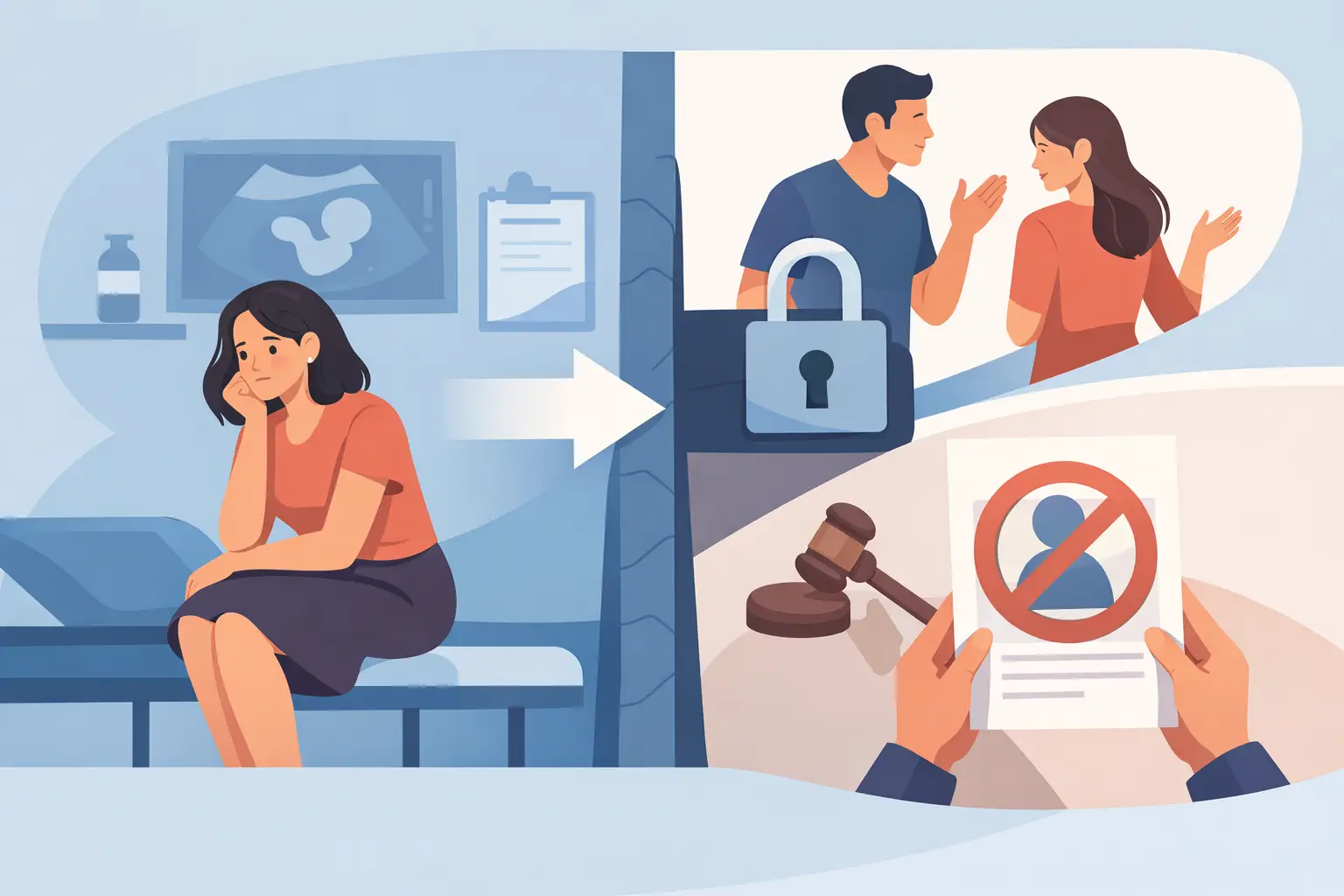
A great many women ask the same question in a moment of panic: can I have an abortion if my partner says no, or if I cannot safely tell him at all?
If you are facing that situation, the first thing to know is that you are not selfish, reckless, or wrong for wanting clear answers. Pregnancy decisions can become emotionally charged very quickly, especially where relationships are strained, controlling, unstable, or simply not supportive. In healthcare, your safety, your privacy, and your legal position matter more than anyone else’s opinion.
Abortion without partner consent – what it means
Abortion without partner consent means a woman seeks pregnancy termination care without getting permission from her husband, boyfriend, fiancé, or the person involved in the pregnancy. For many patients, this is not about secrecy for its own sake. It is about autonomy, privacy, and sometimes protection.
There are different reasons a woman may choose not to involve a partner. She may fear pressure, threats, emotional abuse, or forced continuation of the pregnancy. She may know that telling him would put her housing, finances, immigration status, or physical safety at risk. In other cases, the relationship may have ended, contact may be limited, or the partner may simply be unavailable.
None of these situations are unusual in abortion care. They are part of real life, and they are exactly why confidential medical support matters.
Is partner consent legally required?
In most clinical settings, consent for abortion is centred on the pregnant woman, because it is her body and her medical care. A partner does not normally have the legal right to approve or refuse treatment on her behalf. Doctors assess the patient’s own informed consent, her medical condition, and whether the treatment is lawful and safe.
That said, legal rules vary by country and can also depend on gestational age, medical history, and local healthcare regulations. This is where many women become frightened, because online information is often contradictory or written for a different country altogether.
The safest approach is always to get advice from a qualified abortion provider who understands the law in the place where you are seeking treatment. A proper clinic will explain what documentation is needed, what type of procedure is suitable for your pregnancy stage, and how confidentiality is handled. It should never pressure you into involving a partner if the law does not require it.
Your consent is the one that matters
A medical decision is valid when the patient understands the procedure, its risks, alternatives, and expected outcome, and agrees to go ahead freely. That is the core principle of consent.
If you are an adult with capacity to make your own healthcare decisions, a partner’s disagreement does not usually cancel your right to treatment. A doctor’s duty is to you. That includes discussing whether you want a medical abortion with tablets or a surgical procedure, whether there are warning signs in your case, and what support you may need afterwards.
This can feel difficult if your partner is insisting that he has equal say because the pregnancy is also his. Emotionally, he may feel strongly. Legally and medically, though, pregnancy happens in your body, and the health risks, pain, complications, and recovery affect you directly. That is why your consent carries the central weight.
When privacy is not just a preference
Some women looking for abortion without partner consent are not simply trying to avoid an argument. They are trying to stay safe.
If your partner monitors your phone, controls your money, checks your messages, follows your movements, or threatens you over the pregnancy, this is a serious concern. The same applies if you fear violence, blackmail, public exposure, or being forced into a decision against your will.
In these cases, confidentiality is not a luxury. It is part of safe medical care. A discreet clinic will usually take care with appointment communication, consultation privacy, records handling, and aftercare instructions. You should be able to ask direct questions about how your information is protected and whether communication can be limited to a safe number or channel.
Abortion without partner consent and medical safety
The fact that a partner is not involved does not make an abortion unsafe. What affects safety is the quality of the medical assessment, the correct method for the pregnancy stage, and proper follow-up.
For an early pregnancy, a medical abortion may be appropriate, but only after confirming how far along the pregnancy is and whether there are any reasons tablets may not be suitable. For a later pregnancy, or where there are medical complications, a surgical option may be more appropriate. The right pathway depends on your gestation, symptoms, scan findings if needed, and overall health.
This is one reason self-managing in silence without clinical guidance can be risky. Many women feel tempted to act quickly and tell no one. Speed matters, but supervision matters too. The sooner you get a confidential medical opinion, the more options you usually have.
Should you tell your partner anyway?
There is no one-size-fits-all answer. For some women, involving a supportive partner makes the process easier emotionally and practically. He may help with transport, costs, recovery, or simply being present.
But support and entitlement are not the same thing. If your partner is kind, safe, and respectful, you may choose to tell him. If he is unpredictable, coercive, or likely to make the situation worse, you may choose not to. Both decisions can be reasonable depending on your circumstances.
A good healthcare provider will not force a moral script onto you. Instead, they should help you think through the practical realities: Do you feel safe? Do you need someone to accompany you? Could disclosure affect your wellbeing? Will you have private space to recover? These are grounded questions, not judgements.
What a confidential clinic should offer
If you are seeking care without involving a partner, the standard should be high. You should expect clear medical advice, female-led compassionate support where available, and strict respect for your privacy.
A proper service should explain the difference between medical and surgical abortion, tell you what to expect before and after treatment, and make space for questions without pressure. It should also be honest about limits. Not every woman is suitable for the same method, and not every symptom can be managed remotely.
At Dr. Leena Abortion Centre, this kind of care is built around confidentiality, legal compliance, and judgement-free support for women who need safe answers quickly. That matters particularly for patients who are unmarried, distressed, or afraid of family or partner involvement.
Questions women often ask in private
Many patients do not ask, “Can I decide?” straight away. They ask practical versions of the same fear.
They ask whether anyone will contact their partner. They ask whether they can attend alone. They ask whether records will stay private. They ask whether taking tablets at home can be kept discreet. They ask whether bleeding and cramping will be manageable if they cannot explain what is happening.
These are sensible questions. They deserve calm, factual answers. Privacy can often be protected, but the details depend on the method used, your stage of pregnancy, and the level of aftercare you may need. This is why personalised advice is much more useful than general internet reassurance.
If you are feeling pressured from either side
Pressure can go both ways. Some women are being forced to continue a pregnancy. Others are being forced to end one. Neither is acceptable.
Consent must be your own. If anyone is threatening, manipulating, or cornering you into a decision, tell the clinician. That information changes how your care should be handled. The right provider will take coercion seriously and help you make a decision that is informed, voluntary, and medically safe.
Even if you feel confused, you do not need to arrive with every answer settled. You can start with a private consultation, understand your options, and decide from there. That breathing space is often what turns panic into clarity.
The next step matters more than the fear
When you are worried about abortion without partner consent, the fear can make everything feel urgent and impossible at the same time. But one private conversation with a qualified provider can change that very quickly. It can tell you what is legally possible, what is medically suitable, and how to move forward safely without unnecessary exposure.
You do not need permission to ask for help. You need accurate information, respectful care, and the freedom to make a decision about your own body in confidence.
