
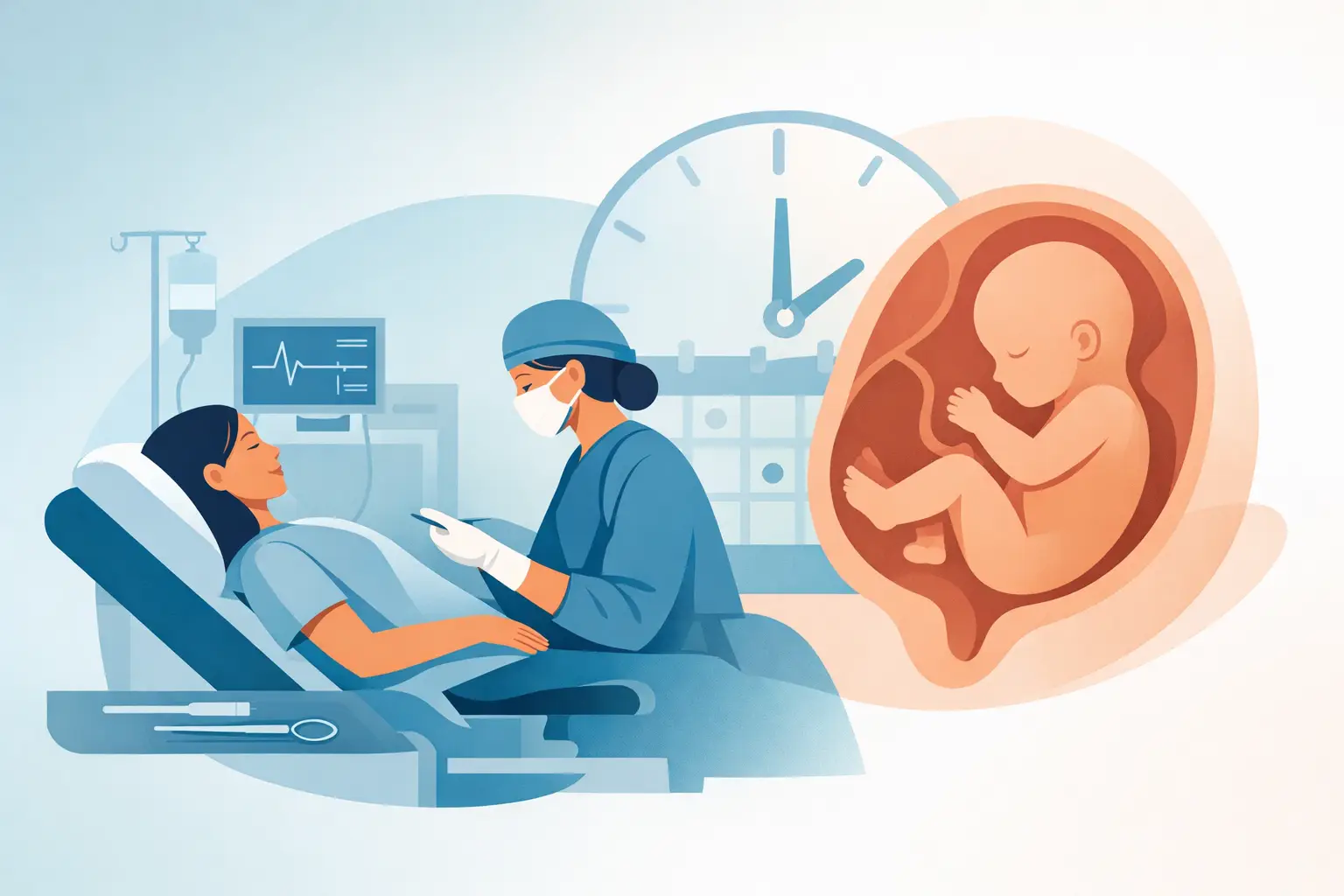
When you are dealing with a pregnancy that has gone beyond the earliest weeks, the questions usually become more urgent, not less. You may be worried about safety, privacy, pain, how long the process takes, or whether anyone else needs to be involved. If you are looking for clear answers about surgical abortion up to 24 weeks, you deserve information that is calm, factual, and free from judgement.
At this stage, the right care matters. A later procedure should always be handled by an experienced medical team in a legal, confidential setting, with proper assessment before treatment and real aftercare afterwards. That is what protects your health and gives you space to make a decision with confidence.
What surgical abortion up to 24 weeks means
Surgical abortion up to 24 weeks refers to an in-clinic procedure used to end a pregnancy under medical supervision. The exact method can vary depending on how many weeks pregnant you are, your medical history, and the findings from your scan and consultation.
In earlier first-trimester cases, the procedure may be shorter and simpler. As the pregnancy progresses, the process usually requires more preparation, closer monitoring, and a more individualised treatment plan. That is why a proper consultation is never just a formality. It helps the doctor confirm gestational age, review your health, explain the safest option, and talk you through what to expect.
For many women, a surgical procedure is chosen because it is completed in a clinical setting and managed directly by a doctor. Some patients prefer that because it feels more controlled, more private, and less drawn out than managing a termination at home.
When a surgical procedure may be recommended
There is no single reason women seek abortion care later in pregnancy. Sometimes periods are irregular and the pregnancy is recognised later. Sometimes there has been uncertainty, denial, travel, financial delay, relationship pressure, or fear of seeking help sooner. In other situations, a woman may have attempted pills already without success, or new medical information may have changed the decision.
This is why compassionate care matters so much. A good clinic does not treat later abortion as a moral issue. It treats it as healthcare.
A surgical approach may be recommended when the pregnancy is too advanced for an early medical abortion, when a faster in-clinic option is more suitable, or when the doctor believes it is the safest method for your specific situation. It depends on your weeks of pregnancy, symptoms, general health, and whether there are any concerns such as bleeding, severe pain, infection, or a previous uterine procedure.
What happens before the procedure
Before any surgical abortion up to 24 weeks, you should expect a full assessment. This normally includes a consultation, ultrasound scan, review of your medical history, and discussion of the available treatment plan. You may also need blood tests or other checks depending on your condition and the stage of the pregnancy.
This part is important because it confirms that the procedure being offered is medically appropriate. It is also where you can ask direct questions about privacy, pain relief, cost, time at the clinic, and recovery.
In a specialist service, you should be told clearly what the process involves and whether any preparation is needed before the procedure itself. In some second-trimester cases, cervical preparation may be required so that treatment can be carried out more safely. That can affect timing, so it is better to know this in advance rather than expect a same-hour visit if your pregnancy is further along.
What to expect on the day
The experience on the day depends on how many weeks pregnant you are and which surgical method is being used. Some procedures are relatively quick, while others require more time, preparation, observation, and recovery at the clinic.
You will usually be guided through each stage by a female-led medical team, with privacy protected throughout. Pain management or sedation options may be discussed depending on the procedure and your medical needs. The goal is not simply to complete the treatment. It is to keep you safe, comfortable, informed, and supported.
After the procedure, you may spend some time resting while staff monitor bleeding, pain levels, and your overall condition. Once the team is satisfied that you are stable, you will be given aftercare instructions and told what symptoms are expected during recovery.
Is surgical abortion up to 24 weeks safe?
When performed legally by qualified clinicians in the correct medical setting, surgical abortion is generally safe. The key issue is not just the procedure itself, but where and by whom it is done. Unsafe, unregulated, or secret arrangements create far more risk than properly supervised clinical care.
As with any medical procedure, there can be risks. These may include bleeding, infection, retained tissue, reaction to medication, or the need for further treatment. The risk profile can change as pregnancy advances, which is one reason later procedures should never be approached casually or without proper assessment.
That should not be used to frighten you. It simply means you need honest, skilled care. A trustworthy provider will explain both the benefits and the possible complications in plain language, without pressure.
Recovery after the procedure
Most women experience some bleeding and cramping afterwards. This can feel similar to a heavy period at first, though the intensity varies. Recovery is not exactly the same for everyone. Your body, the gestational age, and the type of procedure all influence how you feel in the hours and days that follow.
You may be advised to rest, avoid strenuous activity for a short period, and watch for warning signs such as very heavy bleeding, fever, severe pain, or unusual discharge. Follow-up matters because even when everything goes smoothly, reassurance from your doctor can make recovery less stressful.
Emotional responses also differ. Some women feel relief immediately. Others feel tired, tearful, numb, or unsettled for a few days. None of these responses automatically mean something is wrong. What matters is having access to support that is respectful and non-judgemental.
Privacy, consent, and confidentiality
For many patients, confidentiality is not a preference. It is the deciding factor. If you are worried about family, a partner, or social pressure, you may be searching for reassurance that your care will remain private.
A specialist clinic should protect your information carefully and discuss your treatment in a discreet, respectful way. Legal requirements vary by location and medical circumstances, so the best approach is always to ask directly what documents are needed and how your records are handled.
Many women are also concerned about whether someone else must give permission. In a lawful clinical setting, consent is centred on the patient herself. You should be spoken to as the decision-maker regarding your own healthcare, with clarity about what is required and what is not.
Choosing the right clinic
Not every provider is equipped to offer later abortion care safely. If you are considering a clinic, look at whether it offers proper scanning, doctor-led assessment, clear aftercare, and real confidentiality. Speed matters, but safety matters more.
It also helps to choose a provider that does not make you explain yourself repeatedly or defend your reasons. You need practical support, not judgement. At Dr. Leena Abortion Centre, the focus is on legal, confidential, compassionate care that gives women clear options and proper medical supervision at every stage.
Questions worth asking before you book
Before you commit to treatment, ask how many weeks the clinic can legally treat, what method may be used at your stage of pregnancy, whether sedation or pain relief is available, how long you should expect to stay, and what aftercare is included. You can also ask what symptoms are normal afterwards and what emergency support is available if you are worried later.
These questions are not difficult or demanding. They are sensible. A safe provider will answer them directly.
If you are feeling overwhelmed
Needing an abortion later in pregnancy can feel isolating, especially if you are trying to keep the situation private or make a decision quickly. But needing clear medical help does not mean you have done anything wrong. It means you need care that is safe, legal, and compassionate.
The most helpful next step is often the simplest one – speak to an experienced clinic, confirm how many weeks pregnant you are, and get honest guidance based on your actual situation. Once you have accurate information, the path forward usually feels much clearer.