The first 24 hours after an abortion can feel physically draining and emotionally quiet, or unexpectedly intense. If you are wondering how to recover after abortion, the most helpful approach is simple – give your body time, watch for warning signs, and choose support that feels safe and private.
Recovery is not the same for every woman. It depends on whether you had abortion pills or a surgical procedure, how many weeks pregnant you were, your general health, and how you feel emotionally afterwards. Some women feel relief straight away. Others feel tired, sore, unsettled, or all of those at once. All of that can be normal.
How to recover after abortion in the first few days
In the first few days, rest matters more than doing everything perfectly. Most women can return to light daily activity quite quickly, but that does not mean your body has fully settled. Cramping, bleeding, fatigue, breast tenderness, and mood changes are common for a short period after both medical and surgical abortion.
If you used abortion pills, bleeding and cramping are often heavier at first and can come in waves. You may pass clots, especially in the first several hours. If you had a surgical abortion, recovery may feel quicker physically, but you can still have cramping and light to moderate bleeding for several days.
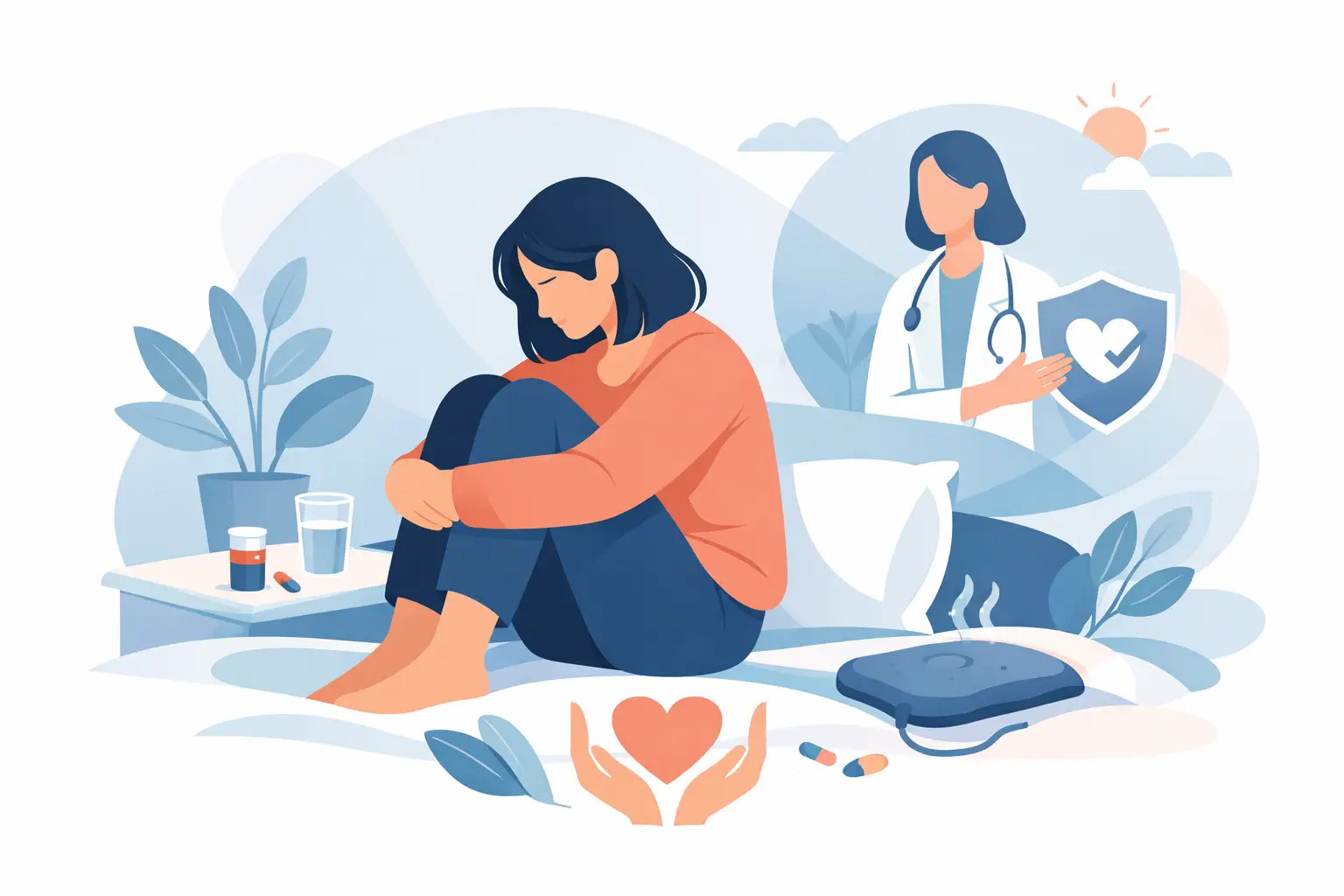
Use sanitary pads rather than tampons in the early recovery period so you can monitor bleeding more easily. Drink water regularly, eat light meals if your stomach feels unsettled, and avoid pushing yourself too soon. Gentle walking can help with circulation and ease stiffness, but strenuous exercise can wait until bleeding and discomfort reduce.
Pain relief can help, but it should be used sensibly and according to medical advice. A warm water bottle or heating pad on the lower abdomen is often enough to ease cramping. If the pain is getting worse instead of better, that is different from normal recovery and should be checked.
What is normal after an abortion
A lot of anxiety after abortion comes from not knowing what counts as normal. In most cases, some bleeding is expected. It may be light spotting or more similar to a period, and after abortion pills it can be heavier at first. Cramping is also common as the uterus returns to its usual size.
You may also notice tiredness, mild nausea, loose stools for a short time, breast fullness, or emotional sensitivity. Pregnancy symptoms usually begin to fade over the next few days, though this can take a little longer for some women. If your hormones are shifting quickly, mood changes can feel stronger than expected.
There is no single correct emotional response. Feeling relief does not make you cold. Feeling sad does not mean you made the wrong decision. Some women feel nothing in particular and simply want privacy and rest. Recovery includes emotional space as well as physical healing.
Warning signs you should not ignore
Knowing how to recover after abortion also means knowing when recovery may not be going to plan. Heavy bleeding needs attention if you are soaking through two large pads an hour for two hours in a row. Severe abdominal pain that does not improve with pain relief, a high temperature, fainting, dizziness, or foul-smelling discharge should also be taken seriously.
If you used abortion pills and still feel strongly pregnant after several days, or if there was very little bleeding at all, you may need a review to confirm the abortion is complete. With surgical abortion, persistent heavy bleeding or increasing pain is also a reason to seek medical advice.
These signs do not always mean something serious is happening, but they should not be left to guesswork. Safe aftercare is part of abortion care, not something separate from it.
Looking after your body properly
Good aftercare is usually straightforward. Rest when you are tired, but do not feel pressured to stay in bed all day if you feel well enough to move around. Eat nourishing food, especially if you have lost blood. Iron-rich foods, fluids, and regular meals can help you feel stronger more quickly.
Try to avoid intercourse, tampons, and anything inserted into the vagina until your clinician says it is safe or until bleeding has clearly settled. This advice can vary slightly depending on the method used and your medical situation, which is why personalised guidance matters.
Bathing is usually fine if advised by your clinician, but some women prefer showers in the first day or two simply because they feel easier. What matters most is hygiene, comfort, and not ignoring signs of infection.
Sleep can be uneven after any stressful medical experience. If you feel exhausted but restless, reduce stimulation, keep your phone away for a while, and allow yourself a calm evening. Recovery is often quicker when your nervous system is not under constant stress.
Emotional recovery matters too
For many women, the hardest part is not the physical recovery but carrying the experience quietly. You may be managing fear, secrecy, pressure from a partner, or worry about being judged. In that situation, emotional recovery is not a luxury. It is part of protecting your health.
You do not have to force yourself to talk if you are not ready. Some women prefer one trusted person, while others want complete privacy. What helps is being honest with yourself about what you need. That may be silence, reassurance, practical help at home, or professional counselling.
If you feel overwhelmed, numb for a long time, panicked, or unable to cope with daily life, seek support. Emotional distress after abortion is not a sign of weakness. It is a sign that you deserve care.
At Dr. Leena Abortion Centre, aftercare is treated with the same seriousness as the procedure itself because women often need both medical reassurance and emotional calm once the immediate crisis has passed.
Returning to normal activities
Most women want to know when life can go back to normal. The honest answer is that it depends. Some are ready for work the next day, especially after a straightforward early abortion. Others need several days before they feel physically and emotionally steady.
If your job is physically demanding, or if you are still bleeding heavily and cramping, give yourself more time where possible. If you can work from home or reduce your schedule briefly, that can make recovery easier. There is no prize for acting as though nothing happened.
Exercise should return gradually. A short walk is very different from an intense gym session. If movement increases bleeding significantly or leaves you feeling faint, slow down. Your body usually tells you when you are doing too much.
Your period, fertility, and contraception
One detail many women are not prepared for is how quickly fertility can return. You can ovulate again before your next period, which means pregnancy is possible quite soon after abortion. If you do not want another pregnancy, contraception should be discussed early rather than waiting for your cycle to settle.
Your next period often returns within four to six weeks, though this can vary. It may be slightly different from usual at first – earlier, later, heavier, or lighter. That alone is not usually a problem.
If your period does not return as expected, or if you have ongoing pain, unusual discharge, or confusion about a pregnancy test result, follow-up advice is sensible. It is better to ask than to sit with uncertainty.
When confidential support makes recovery easier
Private, judgment-free aftercare can make a major difference, especially if you are recovering in a stressful home or social environment. Women in Dubai and across the UAE often tell us that privacy is not just a preference. It is essential to feeling safe enough to rest and recover properly.
That is why follow-up care should feel clear, respectful, and discreet. You should know what symptoms are expected, what is not, and who to contact if something changes. Fast answers reduce panic. Confidential guidance helps you heal without feeling exposed.
Be gentle with yourself over the next few days. Recovery is rarely about doing everything perfectly. It is about listening to your body, noticing what you feel, and allowing yourself care without guilt.