
Is abortion legal in the UAE? (2026 Update)
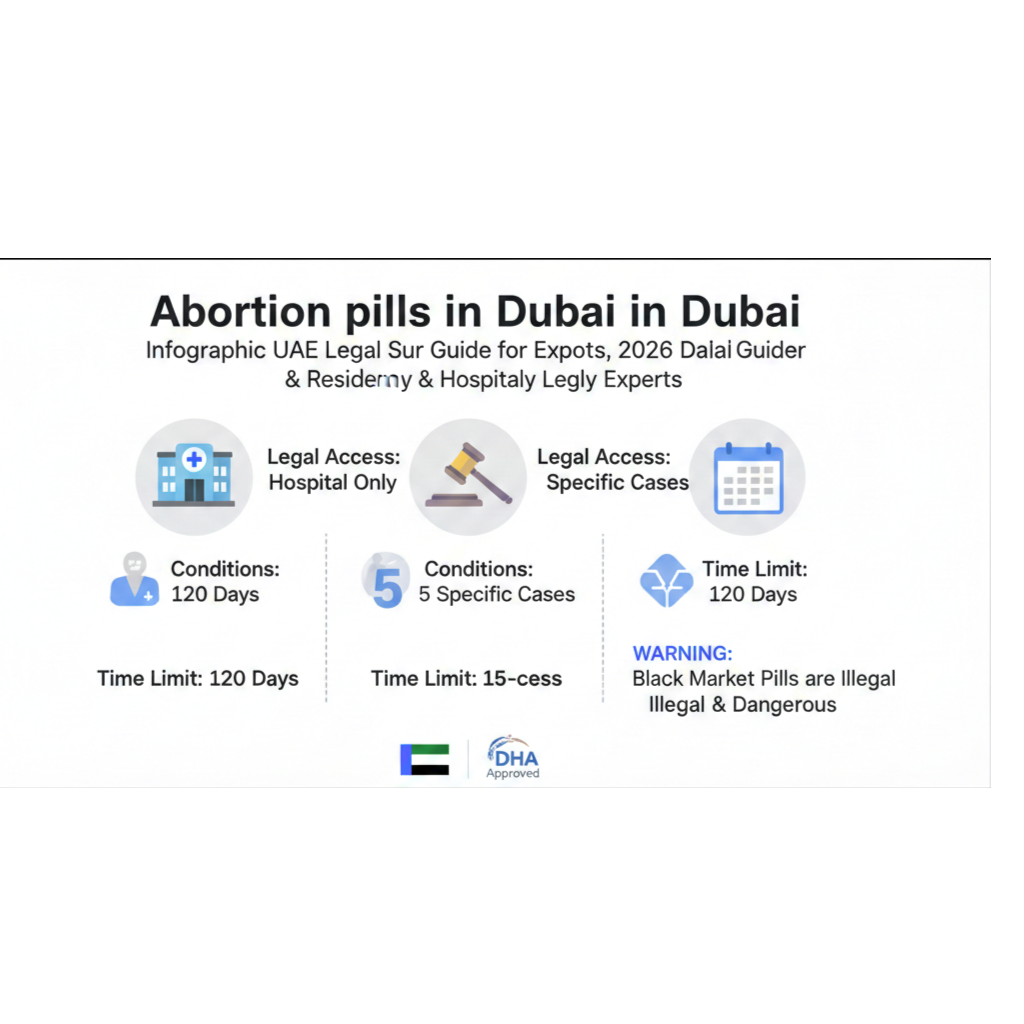
Yes, medical abortion is legal in the UAE under Cabinet Resolution No. 44 of 2024, provided the procedure occurs within the first 120 days and meets one of these criteria:
- Health Risk: To save the mother’s life or physical health.
- Fetal Abnormalities: Confirmed severe medical conditions.
- Legal Grounds: Cases involving rape or incest (with evidence).
- Mutual Consent: A joint request by spouses approved by a medical committee.
⚠️ Critical Safety Warning: > Abortion pills (Cytotec, Mifepristone) are strictly regulated. They are not for sale in pharmacies or online. Buying pills from unofficial sources in Dubai or Abu Dhabi is illegal and carries high risks of fraud, medical complications, and legal penalties.
Finding yourself facing an unwanted pregnancy in the UAE can be a very overwhelming experience. You have urgent questions about using abortion pills in Dubai, Abu Dhabi, and other Emirates.
UAE laws are firmly based in culture but have developed over time. New federal regulations, in place as of early 2026, offer clearer and safer routes for women in certain situations.
But what needs addressing right away is this: Abortion pills (mifepristone and misoprostol) are not sold in pharmacies or online—legally—in the UAE. Buying through the back door is not only illegal but also harmful to your health—not only should you avoid buying abortion pills for sale in Dubai at places that aren’t authorized, such as from underground sellers or via the Internet, but there are also many dangers in doing so.

Abortion Laws in UAE (2024–2026)—
Under Cabinet Resolution No. 44 of 2024 (effective June 21, 2024) and the updated Medical Liability Law (Federal Decree-Law No. 4/2016, amended), abortion is permitted only in the first 120 days of pregnancy for these reasons:
- The pregnancy seriously threatens the woman’s life or physical health (backed by specialist confirmation).
- The fetus has severe, confirmed abnormalities (supported by detailed scans and reports from obstetricians, pediatricians, and radiologists).
- The pregnancy resulted from rape, coercion, or any non-consensual act (with evidence and public prosecution involvement).
- The pregnancy stems from incest (similar strict checks apply).
- Both spouses jointly request it, with approval from a specialized committee.
That committee normally includes an OB-GYN, a psychiatrist or psychologist, and a public prosecution representative. The entire procedure happens in a licensed facility approved by the Ministry of Health and Prevention (MOHAP), Dubai Health Authority (DHA), or Abu Dhabi Department of Health (DOH).
Expats and residents usually need a valid UAE residency visa active for at least one year. The steps involve medical proof, committee review, and (non-emergency) written consent. It’s not fast or guaranteed—each case gets an individual assessment.
Outside these exceptions, abortion is a crime under the Penal Code. Consequences can include jail time, fines, deportation for non-citizens, or license loss for doctors. Risks extend to anyone assisting.
Why You Can’t Buy Abortion Pills in Dubai, Abu Dhabi, or the UAE
Pharmacies won’t provide mifepristone or misoprostol without a valid, committee-linked prescription. Online ads promising delivery to Dubai or Abu Dhabi? Mostly scams, customs blocks, or fake/expired products.
Black-market deals often cost AED 5,000+, but the pills are commonly counterfeit, wrong-strength, or useless. Genuine ones still fail 15–20% without oversight, leading to heavy bleeding, infections, or incomplete procedures needing hospital intervention. Before the 2024 reforms, some women used ulcer drugs as workarounds—resulting in too many emergencies. The changes were meant to stop that cycle.
How a Legal Medical Abortion Works (When Approved)
If you qualify for an abortion under the new law and receive committee approval, the process follows international best practices for medical abortion:
- Initial Tests: Ultrasounds and blood tests confirm pregnancy details and rule out complications like ectopic pregnancy.
- Mifepristone: Taken first, this medication blocks the hormones necessary for the pregnancy to continue.
- Misoprostol: Taken 24–48 hours later, this medication causes contractions to expel the pregnancy.
- Cramping and Bleeding: Expect heavy bleeding and cramping similar to a very heavy period or early miscarriage, usually within hours.
- Follow-up: A follow-up visit within 1-2 weeks ensures the process was successful.
Recovery and Fertility After a Medical Abortion
Recovery is typically quick for most women, with most returning to normal activities within a few days. Bleeding may continue for a couple of weeks. Ovulation can occur within two weeks, meaning fertility returns rapidly. Contraception is recommended if you don’t plan to get pregnant immediately.
Managing Complications
Serious complications such as soaking more than two maxi pads per hour, fever over 38°C, or foul-smelling discharge should be addressed immediately at a hospital.
Practical Alternatives When Local Rules Don’t Fit
If you don’t qualify for an abortion under UAE law or feel the process is too exposed, many women consider options abroad.
Abortion Tourism: Exploring Safe and Legal Alternatives
- India: Abortion is legal up to 24 weeks under India’s Medical Termination of Pregnancy Act. Clinics in cities like Delhi, Mumbai, and Bangalore offer medical abortion services, with costs ranging from AED 2,000 to AED 10,000 depending on gestation.
- Turkey and Europe: Some women travel to Turkey or European countries, where abortion is also legal, though visa and cost factors vary.
Choosing a licensed, government-approved clinic is essential to ensure the procedure is safe and legally compliant.
Adoption and Support Services in the UAE
If continuing the pregnancy isn’t an option, the UAE provides adoption services through government channels and NGOs. There are also support programs for single mothers.
Beyond the Rules: Emotional and Practical Side
Decisions like this stir up everything—relief, sadness, guilt, or confusion. Talking to a counselor, hotline, or friend helps sort feelings. Waiting past 120 days shuts the local legal option, so early contact (even for info) keeps doors open and cuts risks.
Expat concerns—language, cost, privacy—are common. Many clinics offer English and get the added stress.
Frequently Asked Questions
Can abortion pills be delivered to Dubai or Abu Dhabi?
No. It’s illegal to order abortion pills online in the UAE. Many online sources are scams, and what you receive may be counterfeit, expired, or ineffective.
What’s the cost of a legal abortion in the UAE?
Costs for legal abortion at private facilities range between AED 1,000 and 5,000, depending on the clinic. Public hospitals may subsidize part of the cost, while black-market prices are much higher and come with significant risks.
What are my options if I’m outside the legal window for abortion?
If you miss the 120-day legal limit for abortion in the UAE, consider options like adoption services or traveling abroad for legal medical procedures.
Can I get pregnant again after an abortion?
Yes. Ovulation can return as quickly as two weeks after a medical abortion, so contraception is important if you do not wish to become pregnant again immediately.
Are there any upcoming law changes regarding abortion in the UAE?
Currently, there are no significant changes to the abortion laws planned for 2026. However, some advocates are pushing for an extension of the 120-day window to allow for better fetal abnormality detection. No official updates have been made yet.
Final Thoughts: Seek Guidance and Support Early
If you’re facing an unplanned pregnancy, it’s essential to get accurate, non-judgmental information early in the process. You don’t have to navigate this alone. Contact the Ministry of Health helpline, a trusted OB-GYN, or one of the confidential health services in the UAE to discuss your options. Understanding your rights and choices will give you the clarity and peace of mind to make the best decision for you.